Retailer links are affiliate links; we may earn a commission at no extra cost to you. How this works
Disclaimer: This post contains affiliate links. As an Amazon Associate we earn from qualifying purchases.
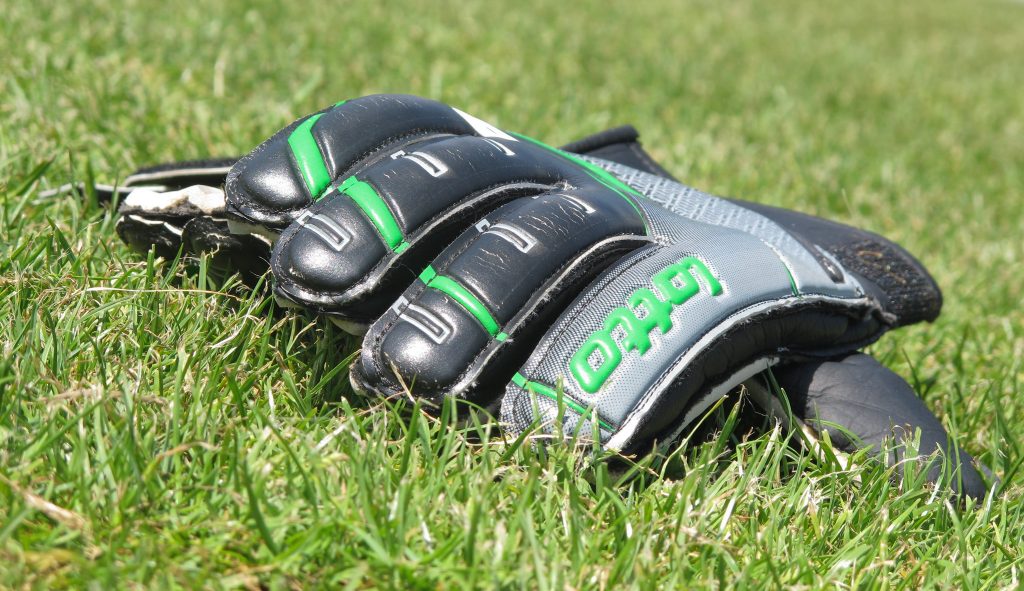
Soccer goalie gloves are a vital piece of goalkeeper gear. Each element of the glove helps protect a goalie’s hand in different ways. It also allows goalies to play in varying conditions.
The goalkeeping position requires some special gear. Some play with a helmet, others play with a mouth guard, but every serious goalkeeper plays with gloves.
Not only are they the most important equipment to have, but they are also incredibly helpful in making more saves and catches. It can also help boost your confidence when defending your goal line.
Way more important than your shoes, the gloves you will pick need to ease your job. This is possible by having an excellent grip, reducing the injury hazard, and being comfortable to wear.
Before you take the field this season, determine what to look for when acquiring a pair of goalkeeper gloves:
Main Features
When buying goalkeeper gloves, it would be best to ask yourself a question: Will these gloves support me with my goalkeeping tasks?
This puts the quality of the grip as your number one priority. Other necessary circumstances to consider are sturdiness and comfort.
Usually made of latex and foam, gk gloves will vary in shape and form from one brand to another. Nonetheless, it is essential to protect your hand while giving you optimal movement freedom.
Part of the Gloves
The makeup of goalkeeper gloves is composed of four different parts, which all have specific functions. They are all equally important in making a great glove and will be an essential factor in your performance on the pitch.
Palm
The palm is also pretty self-explanatory; it consists of the inside part of the glove. Its primary role is to offer maximum contact area with the ball and provide the best grip possible while protecting your hand’s palm.
The palm also helps in catching and securing the ball. Palm types come in two textures: Smooth and dimpled.
Smooth palms are best befitted for match play. They have a clinging agent that helps a player grasp the ball, but it tends to wear off with more use, so they’re best to use only in games to prolong their life.
On the other hand, dimpled palms are most suitable for practice. They have a durable gripping agent, although it isn’t as strong as match gloves’ adherent. Hence, it’s ideal for training.
You want to take special care of this part as it is the most fragile yet, the most important one. Their texture can either be smooth or dimpled.
Smooth equals high quality, dimpled gloves may be more durable, but they offer a lesser grip and are mainly used for practice. As far as thickness is involved, high-quality gloves will have a thicker palm than their cheaper counterparts.
The palm is essential because it provides goalkeepers to catch the ball. The palm may be one smooth layer, incorporate hard ground elements, or have a textured pattern.
Hard ground elements may be added to gloves meant for artificial grass fields. That way, they become both more durable and contain more “stickiness.” Textured patterns are beneficial for use in wet conditions. That’s because they uphold grip while simultaneously disperse water from the surface of the palm.
A smooth latex layer of 3.5 mm to 4 mm is the most common. It is accurate to assume a thicker palm is generally higher quality.
Match gloves have a finer palm with the best grip but compromise on durability. Training gloves have a denser palm with more synthetic materials. This is to make them more durable but simultaneously compromise grip quality.
Backhand
As the name suggests, the backhand is located at the back of the glove. Its primary role is to protect your hand when you punch the ball.
The protection will vary depending on the glove. Cheaper gloves will be made of a foam layer, while the more expensive options will be made of latex. The latter will also likely include a spine structure for increased finger protection.
The backhand is significantly padded to help shield the hand when punching the ball. The quality is usually dependent on the price. Less expensive gloves manage to have just one foam padding layer, while higher-end models are cushioned with latex.
Some common backhand materials include a layer of latex foam cushioning mounted on a breathable textile, knit fabric (like the Adidas Predator Pro), or a neoprene (like the Reusch Pure Contact II G3 Fusion).
Gloves with thin foam layers are often lower end and cheaper. Thick latex creates a more durable glove and can usually last longer through wear and tear on artificial grass surfaces.
Meanwhile, a knit glove or neoprene backhand allows a goalkeeper to have a closer fit that offers more natural movements.
To improve punching ability, the backhand often features embossed latex or silicon elements. To allow for breathability, the backhand may incorporate an air vent system or mesh patches.
Fingers
The fingers are a goalie’s best defense mechanism, as they allow for grasping and holding onto the ball. Finger protection gloves include spines on the inside of the fingers to help in finger support.
The material contracts when force is applied. This is to help prevent hyperextension and separating of digits when catching hard-kicked soccer balls.
The fit depends on a goalie’s preference. Some like the control that more rigid gloves provide, while others choose a looser fit to provide more finger movability.
For the excellent finger protection, look for gloves that have bendable, plastic supports instead of only being padded. This helps stop strains and other injuries.
As goalkeepers reach higher levels of competition, finger protection remains a personal preference. It may be preferred if a goalkeeper has a history of injuries.
It is essential to be aware that finger protection does not prevent all injuries, nor does it protect against stubbed and kicked fingers.
Finger protection can be removable or non-removable. Removable finger spines are typically accessed through a zipper or Velcro pouch on the backhand.
Removable finger protection allows goalkeepers to customize the glove to their unique needs. For goalkeepers who know they want finger spines, they will be satisfied with either non-removable or removable.
Finger protection may consist of spines for all five fingers, while others have protection for four fingers. Gloves with only four spines exclude a thumb spine.
The spines are either segmented (stiff) or flexible (bendable). Segmented spines bend forwards (but not backward) to prevent finger hyperextension. This is the most common type of finger protection.
Flexible spines bend forward and backward and are designed to support the fingers, disperse shock, and remain flexible.
Closure
This part will significantly depend on your personal preferences. Some goalkeepers prefer to secure their gloves very tightly while others will choose to loosen it. Whether you want an elastic closure or a more standard hook and loop is really up to you and your comfort.
The closure is the part that ensures the glove to your hand and comes in three types: hook and loop, v-notch, and bandage.
Hook and loop closures are made of elastic and have an adaptable strap that can be tightened or loosened. V-notch closures allow ventilation (hence the “v”), which keeps your hands cool and dry.
Bandage closures wrap securely throughout your wrist, just as a regular bandage, and provide superior wrist support.
There are closure systems that do not involve Velcro. For example, the Nike Mercurial Touch Goalkeeper Gloves are strapless with a flexible wrist cuff you pull on and off your hand. Similarly, the PUMA evoDISC and PUMA Future Grip 19.1 Goalkeeper Gloves allow goalkeepers to secure their gloves without a strap.
Types of Gloves
Match Gloves
Match goalie gloves are created for competitive soccer players in high school or adult leagues. They are made with quality latex to guard fingers and have great gripping technology.
Because of these high standards, match gloves demand a lot of care and don’t last as long as other goalie gloves.
Training Gloves
Training gloves are suggested for beginner players and practicing needs for elite players. They have less grip but are built to be more durable than match gloves.
Weather Gloves
Weather gloves are made to be worn on a specific weather condition, as they are created to protect the hands from extreme water and wind conditions.
They have specially made latex palms that get stickier when wet, which is critical when playing in the rain.
Determining the Right Glove Size
Of course, none of what I said above would matter if you chose gloves that don’t even fit your hand. That’s why I have added a chart below that will help you know exactly which size will fit your hands.
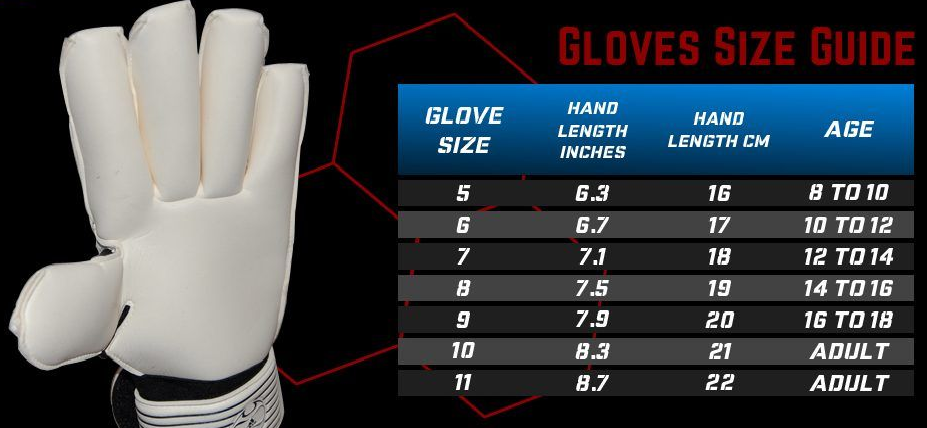
Now that you know the qualities to look for when choosing a pair of goalie gloves, it’s time to find the best size for you.
- Use a tape measure to find the widest part of your hand’s circumference in inches and don’t include your fingers in the measurement. For most, this should be under where your pinky ends, and above your thumb.
- Round this number up to the nearest whole inch.
- Add 1 inch to the rounded number, and you’ll get your soccer goalie glove size.
- For example, if your measurement is 6.75, round it up to 7. Add 1 inch to know that your glove size is an 8.
It is vital that you religiously follow this size chart to get optimal results and maximize the glove’s gripping strength.
There may be a small difference from one brand to another, so make sure you double-check their size charts before ordering.
Remember, if the tips of your fingers touch the end of the glove, they are too small. You want to leave a little bit of extra room.
Also, make sure that the glove doesn’t slip out of your hand when you are using it.
Glove Cuts
The cut or the fit of the glove is how the palm material is made.
As a goalkeeper, this is the first thing you’ll notice. Everyone has their preferences, and it is essential to know what each of these cuts brings to the table to help you find the perfect gloves.
When selecting your preferred cut, it is essential to ask yourself your hand and wrist’s qualities. This helps to determine which cut will fit your hand most comfortably.
Whether you have long or wide fingers and a narrow or wide palm are essential characteristics to consider when choosing which cut is best for you.
Negative Cut
Gloves with a negative cut have closures on the inside. Specially designed for slimmer hands, the contact area is usually quite wide and protects your hands very well. These gloves are generally a tight fit, which enhances your gripping ability.
This cut has the fingers sewn from the inside, giving the snuggest fit of all gloves. Negative cuts are often promoted to female or male goalies who have thinner hands.
Flat Cut
The flat cut is the most common and traditional. The palm, in this case, is made of a single flat foam piece.
Gloves with a flat cut usually target a more amateurish audience and are a great first buy as a beginner goalkeeper. The fit is looser on the hand, which gives it more room to move.
They offer less grip than the other cuts but are also quite often way cheaper.
Roll Finger Cut
Designed to bend your fingers forward, this cut offers a large contact area and an efficient catching stance.
The sides of the palm are “rolled” around and stitched at the back of the fingers. This gives the gloves a tighter fit.
They are great if you tend to get easily injured as they offer better protection. This can also sometimes be referred to as a “Gun Cut.”
Hybrid Cut
Hybrid cuts are a combination of two of the above. Modern gloves are overwhelmingly created with a hybrid cut of the negative and flat cut.
Look for a combination that gives you the pros of two different cuts while eliminating the cons.
Taking Care of Your Gloves
As a goalkeeper, you can do your best to take off your gloves, but latex is a soft product that inevitably shows wear and abrasion after time. This should not stop you from taking care of your gloves. The better you care for them, the longer they will last.
- It is a good idea to have two pairs of gloves, one for match play and one for training. This way, you do not wear out your match gloves during training.
- To get the most grip out of your gloves, you should dampen the palms with water before use.
- Avoid unnecessary abrasion. Do not allow the latex of your palm to touch the Velcro on your wrist strap when taking off your gloves. In training, do not get up using your palms instead of push yourself up with your fist.
- After training, wash your gloves in warm water and allow them to dry naturally. It is essential to treat your gloves gently. Do not use a scrubber or apply heat to dry your gloves. Drying out natural moisture from your gloves will weaken their durability and grip by making them brittle.
- Store your gloves in a cool environment. Please do not leave them out in a hot, dry environment (such as the hot car or laying out in the sun).
Keep your gloves fresh between sessions: once your gloves are dry, slip a pair of glove deodorizers inside after every training session and match. They help soak up leftover sweat and stop your gloves from smelling. We recommend the Meister Glove Deodorizers (check the price on Amazon).
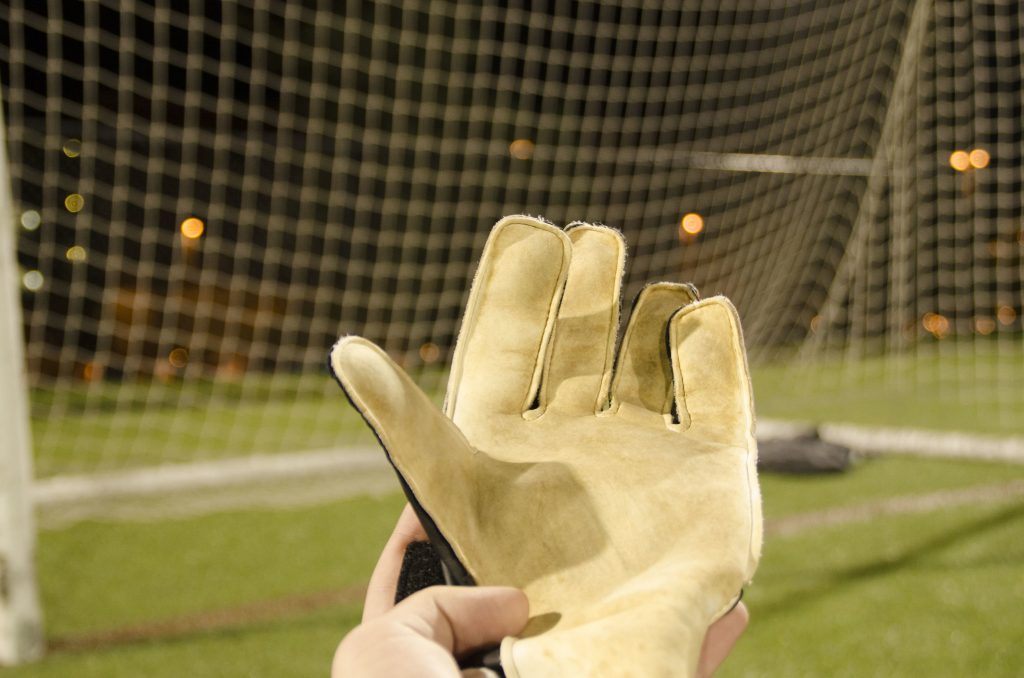
Goalie gloves are an essential part of every goalkeeper’s kit. Yet, preferences differ from one player to another. That’s why we hope that this post can help you find the goalkeeper glove that will fit your hands and needs.
Migrated from the original Goalies Club football site. Expert review pending under our editorial policy. Spotted an error? Tell us.