Goalie gear does not come with an instruction handbook, but maybe it should. As the equipment evolves, it can be frustrating on how it should be worn and sized. Helping you to get the right gear and use it properly is essential for their safety and performance.
If you’re a goalie who never played such a position, you can feel a little lost. If you’re a goalie who never played hockey, you probably feel like you’re from another planet.
New goalies make common mistakes that are dangerous and detrimental to skill development.
Picture a hockey goalie’s butterfly position as a brick wall. Would you build a wall with the strongest bricks on the top and corners, leaving soft and mushy bricks in the middle or near the bottom? That wall would crumble and bend.
A goalie’s protective gear can be the same. Many young goalies begin with quality products on their wall’s perimeter, the leg pads, gloves, blockers, and masks. But if the chest, stomach, collar bone, knees, and the “mid-section” are neglected, the goalie will struggle to stay square to the puck.
Instead of facing shots with confidence and closing the five-hole quickly, they will bend and twist in awkward ways. This can open holes, leave the goalie off balance, and they will struggle to track the puck into their body.
Here is the list of gears used by goalies in 3 of the most popular sports globally; soccer, hockey, and lacrosse, which can either protect or help you with your goalie performance.
Soccer/Football
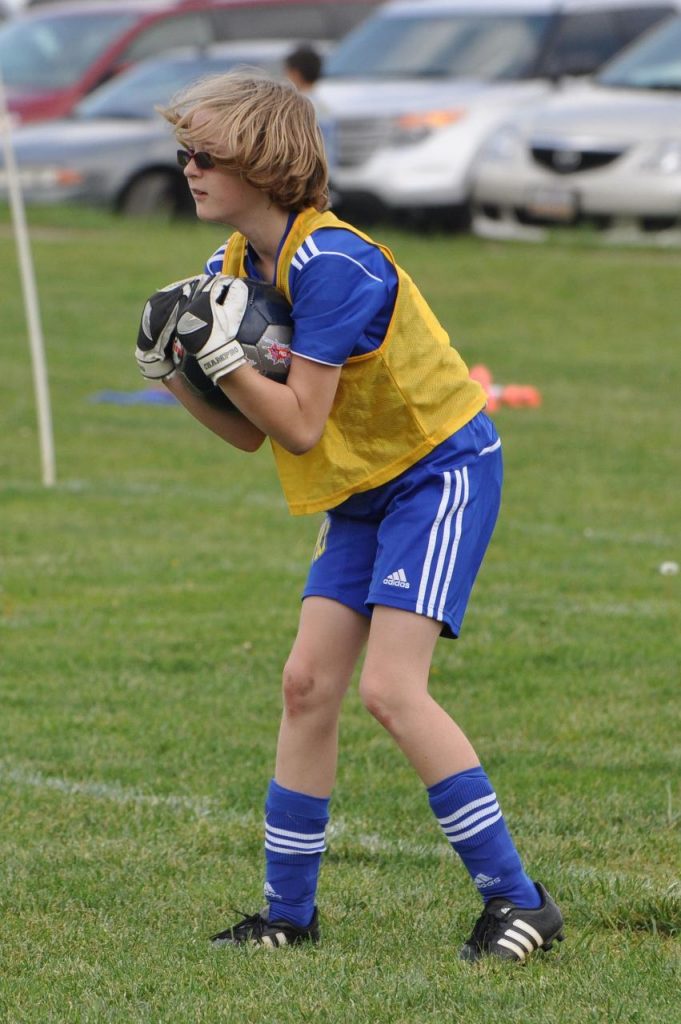
On a basic level, there are few key areas goalkeepers need to work on:
- Handling
- Footwork
- Positioning
- Saving: Catching, deflecting, parrying
- Physical and psychological conditioning
Now, a lot of these areas can be improved with a minimal amount of equipment, including a pair of decent gloves and the right clothing will suffice.
There are a few extra pieces of equipment. But that is not only recommended to improve an all-around goalkeeper game but also extremely fun to use.
First, let’s have a look at some of the basics:
Headgear (Skull Cap)
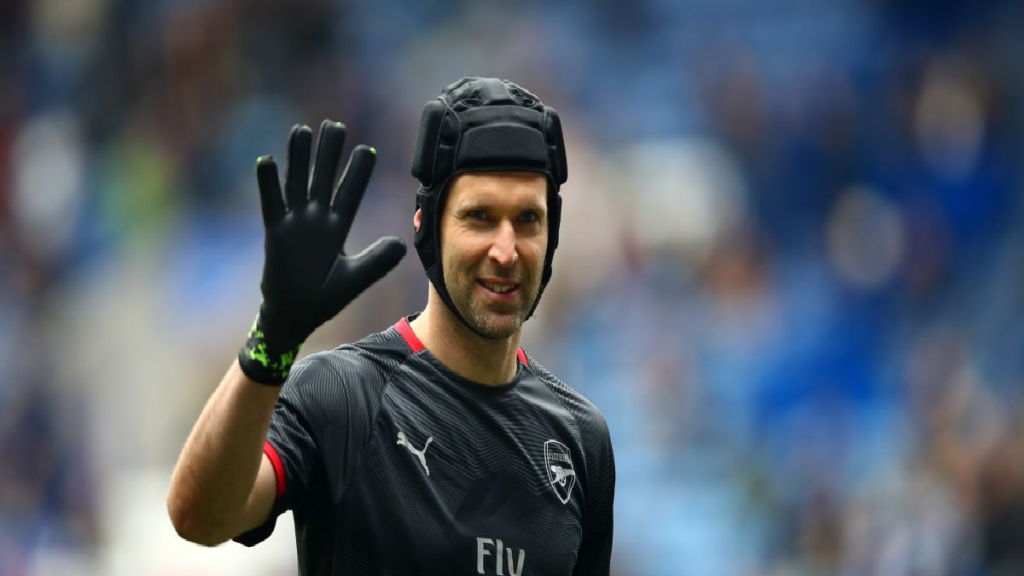
This equipment is optional since soccer players are not allowed to use their hands (except for goalkeepers). Instead, many passes are made using their heads.
Yet, soccer carries a comparatively high risk of head injury from a collision.
According to the American Academy of Pediatrics, there’s a greater chance of getting a head injury from playing soccer than playing American football.
Some soccer players, particularly those who have suffered a head injury in the past, have opted to wear headgear like a skull cap to give their noggins a little added insurance.
To lessen the chances of injury, soccer trainers emphasize proper heading techniques. Some youth soccer leagues have ‘no heading’ rules to reduce the risks.
Jersey
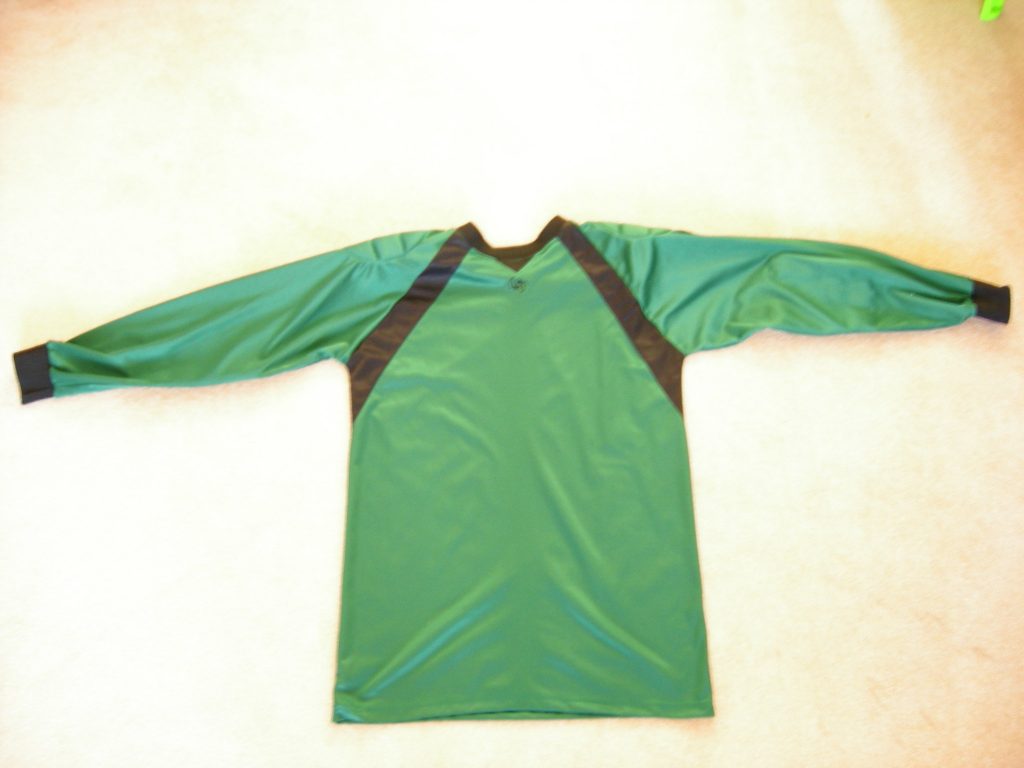
Back then, players used to buy a whole range of tops, fit them over one another, and jump out onto the pitch. These days you’re pretty much spoilt for choice.
Goalie jerseys now tend to be made from a more durable, padded material to give the body extra protection – while not adding too much weight.
Pants
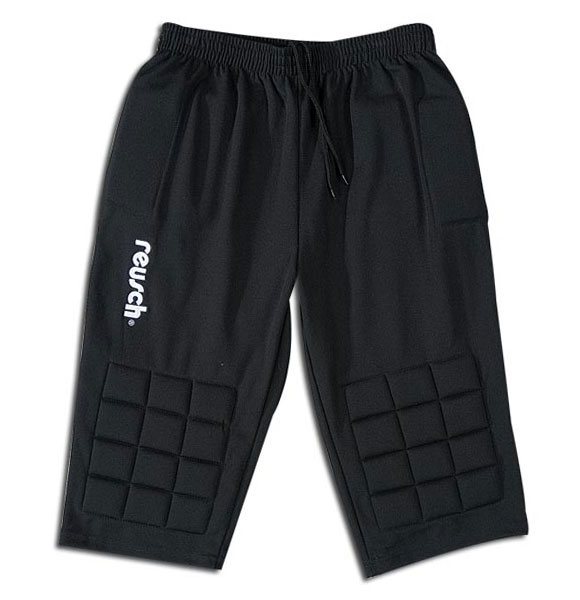
Again, the same sort of design and materials are used for pants, protecting the knees and hips.
Shin Guards
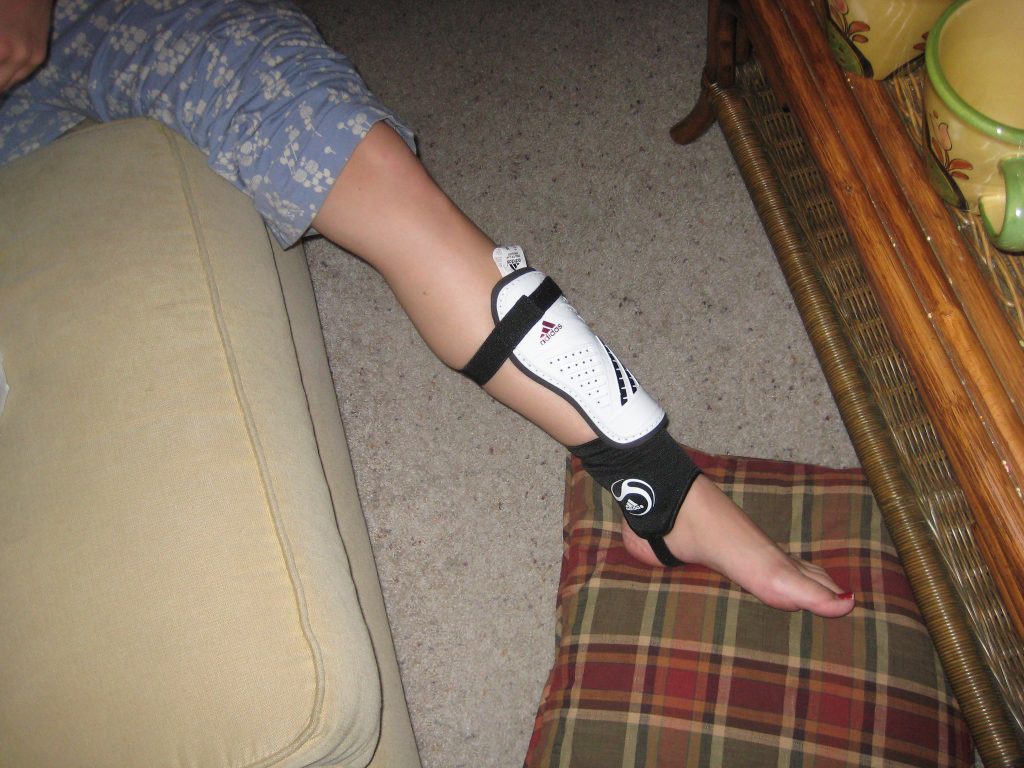
Soccer involves many footworks, and players run the risk of getting injured in other players’ shins.
Soccer shin guards should provide full protection from the top of the cleat, NFHS rules say no more than two inches above, to just below the knees.
Laws of the Game, Law 4, states that approved soccer shin guards:
- Are entirely covered by the stockings
- Are composed of rubber, plastic, or a similar proper material
- Provide a reasonable degree of protection
Cleats
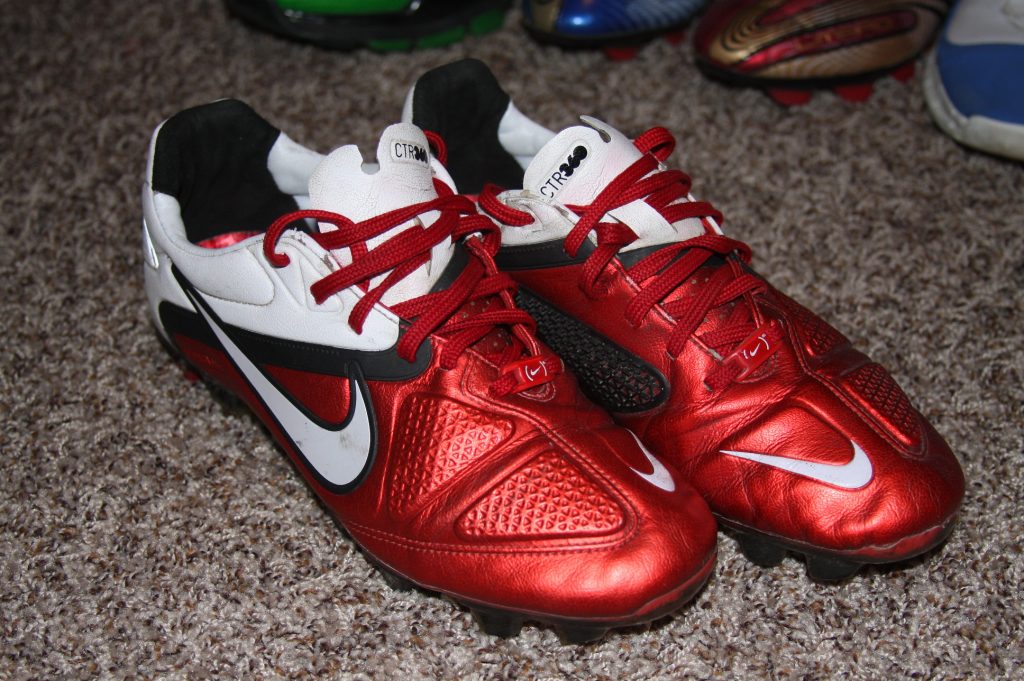
Like any other soccer player, you’re also going to need a decent, comfortable, and long-lasting pair of soccer cleats.
Gloves
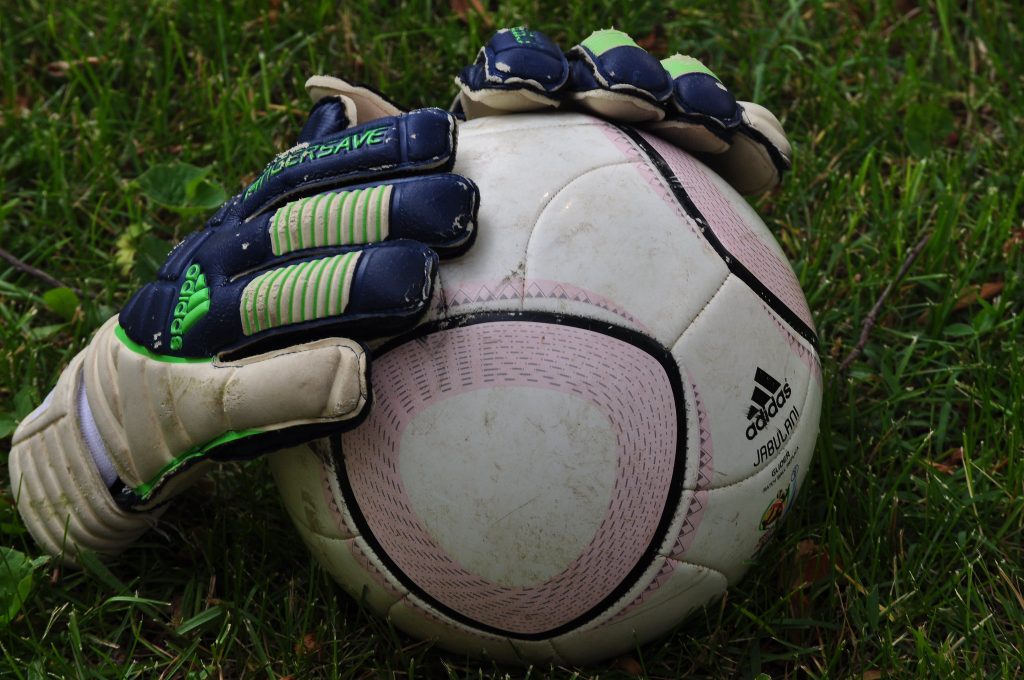
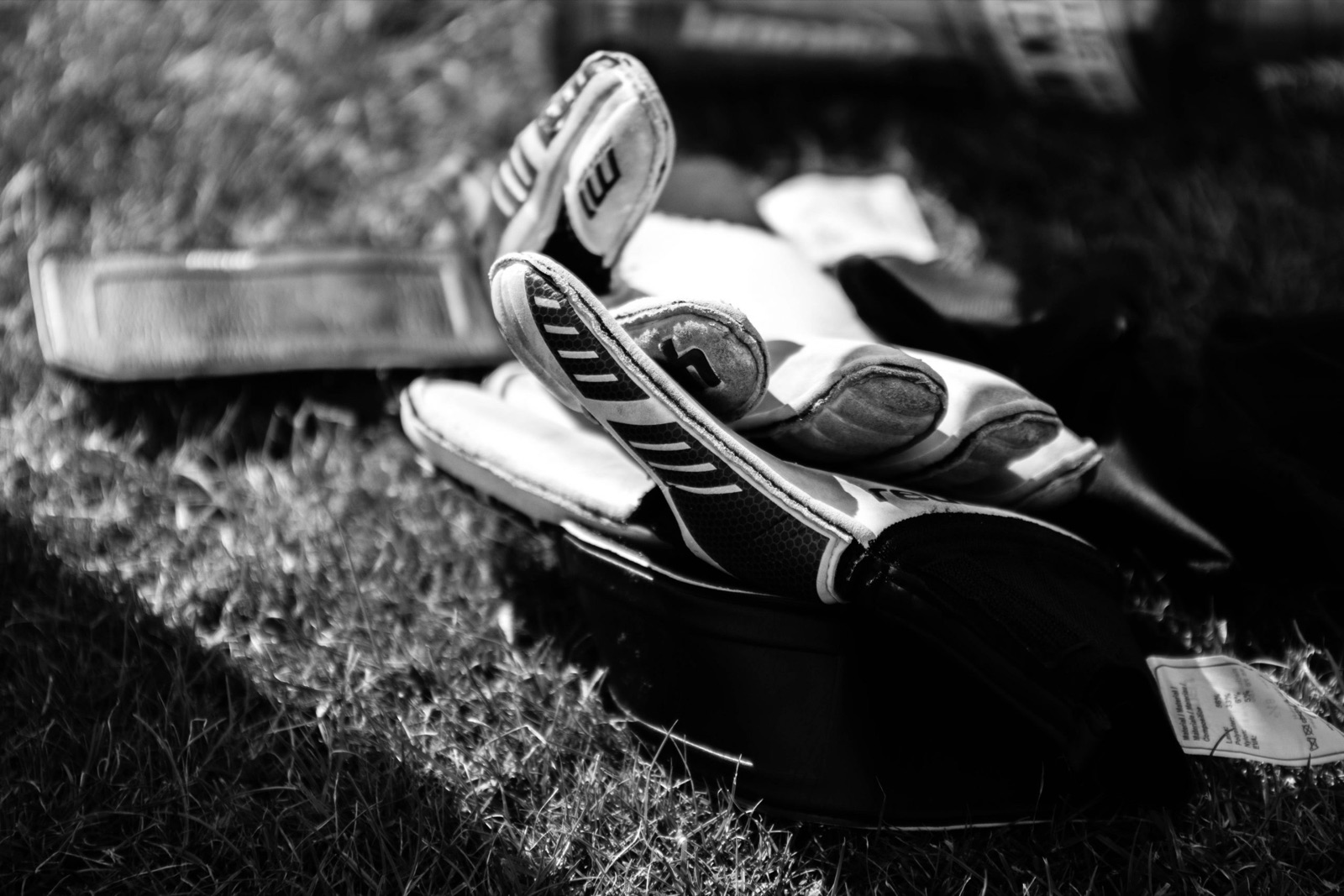
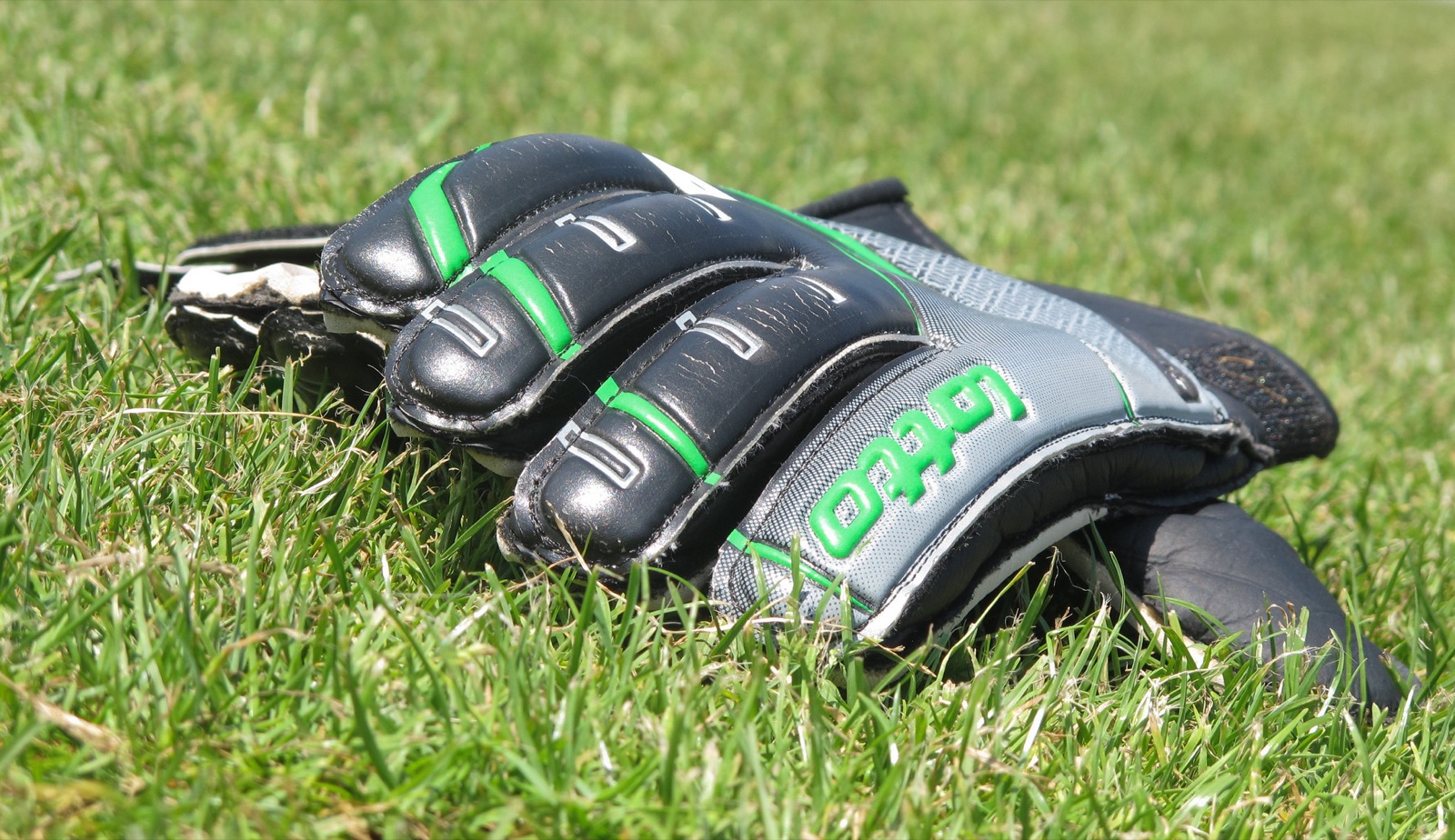
While they are a simple piece of equipment, a pair of quality gloves can benefit a goalkeeper.
To understand and know what you’re buying, it helps to have a little knowledge of the glove’s anatomy:
Backhand
The backhand part of the glove helps support the wrists and is especially useful when it comes to punching the ball.
Palm
The palm of the glove is made primarily so a keeper can safely catch the ball.
To do this, manufacturers use different materials, designed textures, and dimples. These features determine the quality of the glove’s grip.
Closure
The opening where you place your hand to get your gloves on and the bit around your wrists are called closure. Most gloves come with a velcro strap that wraps around the wrist to keep the gloves in position and stop them coming loose.
You’ll want to look for a pair of gloves that have closure but don’t restrict your wrist’s movement. It should also allow adequate air in to keep your hands relaxed.
Fingers
Although you’d be hard-pressed to catch a ball without the other parts of your hand – the fingers are one of the most important parts to focus on. When looking for a pair of gloves, ensure that:
- The gloves fit snug enough around each of your fingers
- Your fingers are protected from bending backward
The price of gloves you see in the market is usually determined by how well the backhand is made and the grip’s quality.
Soccer goalies play more confidently and aggressively, knowing they’re not going to get jabbed in the shins or knocked in the head by a piece of equipment or another player.
Since soccer isn’t technically a contact sport, it’s generally considered safe. But soccer does run its risks, which makes soccer not just fun but exciting too.
Whether you’re in it to win or just enjoy its recreational benefits, there’s no sense in risking an injury that permanently keeps you out of the game. So play hard but safe, and enjoy your soccer season!
Ice Hockey
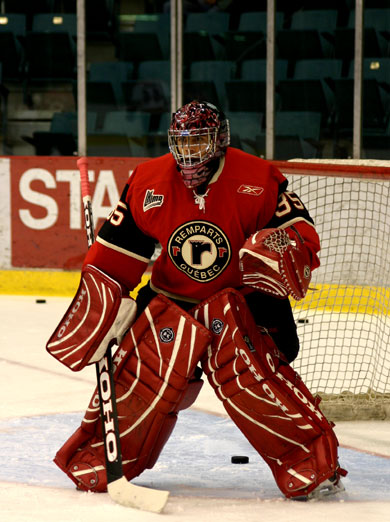
Goalies are provided with unique variations on equipment. It is either to strengthen their chance of stopping pucks and for extra protection.
They offer more protection from frontal contacts while producing lesser or no protection to the goalie’s back. This is because a goalie should continuously face the action and a hit on a non-padded area is commonly a mistake on the part of the goalie.
Virtually all of the following equipment is required in any league:
Goalie mask or helmet and wire facemask
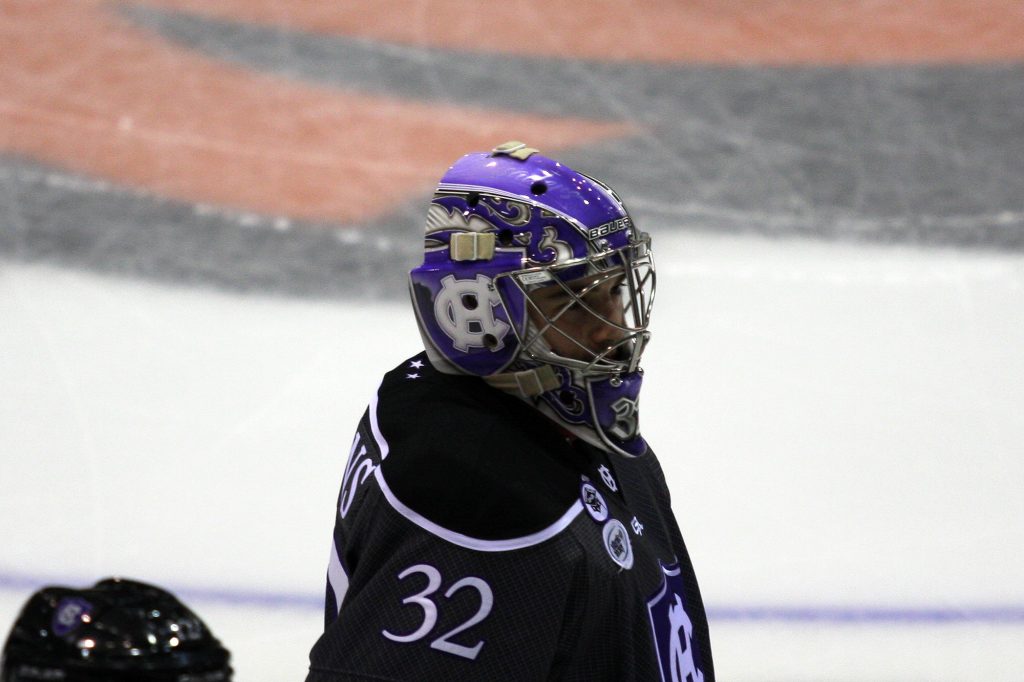
Masks are provided to the player’s face and can endure multiple high-speed impacts from pucks.
Most leagues now promote or require that goalies hang a throat protector (slightly like a gorget in form and function). They can also wear a padded neck guard to shield against pucks and skate blades.
These are now ordered for all NHL goalies after Clint Malarchuk’s jugular vein was severed in a game by a player’s skate blade.
Goalie stick
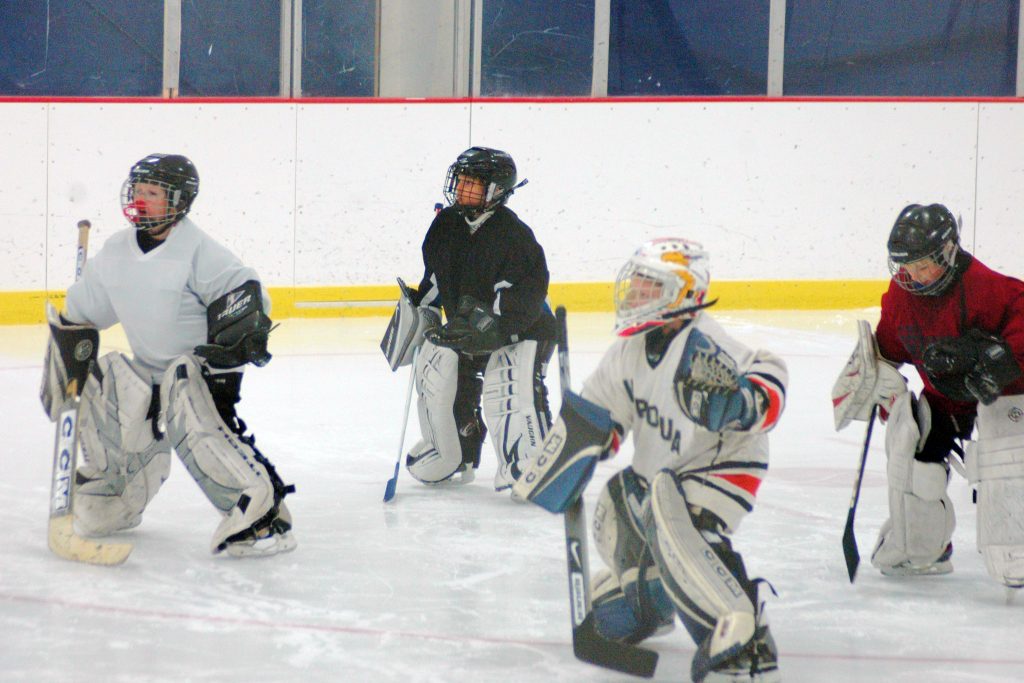
It includes a larger blade than player sticks, as well as a widened flat shaft.
These are usually made of wood for durability instead of the carbon-fiber construction of modern player sticks. But it may also have fiberglass or carbon-fiber panels on the blade and shaft for improved impact resistance.
Mostly used to prevent, but the goalie can play the puck with it. The blade may be curved to help play the puck.
Stick length tends towards being smaller than player sticks. This is to provide better coverage between the blocker and the torso side when in a butterfly pose.
It is also used for stopping the paddle flaring out when standing, creating rifts between the five-hole and the paddle.
Goalie skates
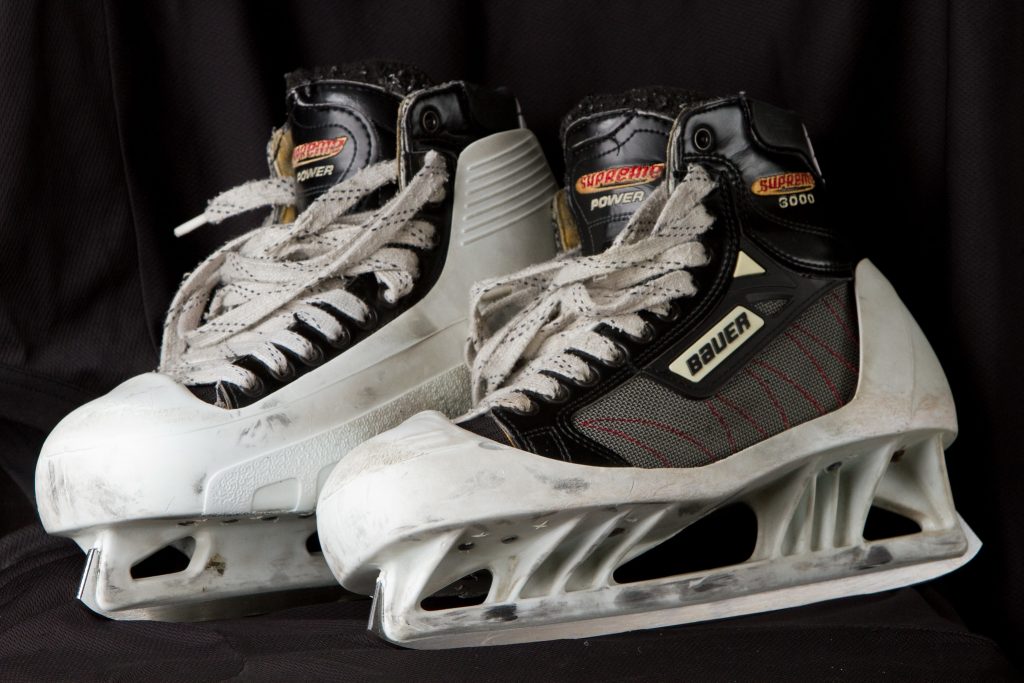
A thicker blade with a larger blade radius and less ankle support provides a goalie to slide off his skates to make “pad stops” more easily.
The boot is closer to the ice surface than a regular hockey skate to stop pucks from slipping through the boot and skate blade area.
Standard hockey skates provide propulsion and adequate protection but are practically never seen.
Chest and arm protector
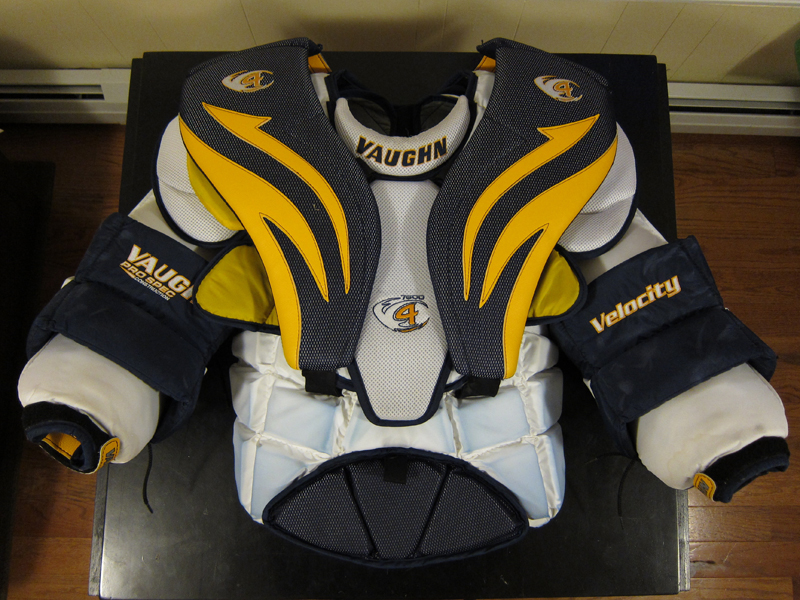
It is more thickly stuffed in the front than a player’s shoulder pads, including the forearm, elbow, and biceps protection.
The protective area spreads down to the abdomen and is usually tied onto the pants to provide seamless protection.
These pads offer very little spine/back protection to save on weight and material and prevent heat accumulation.
Catch glove or trapper
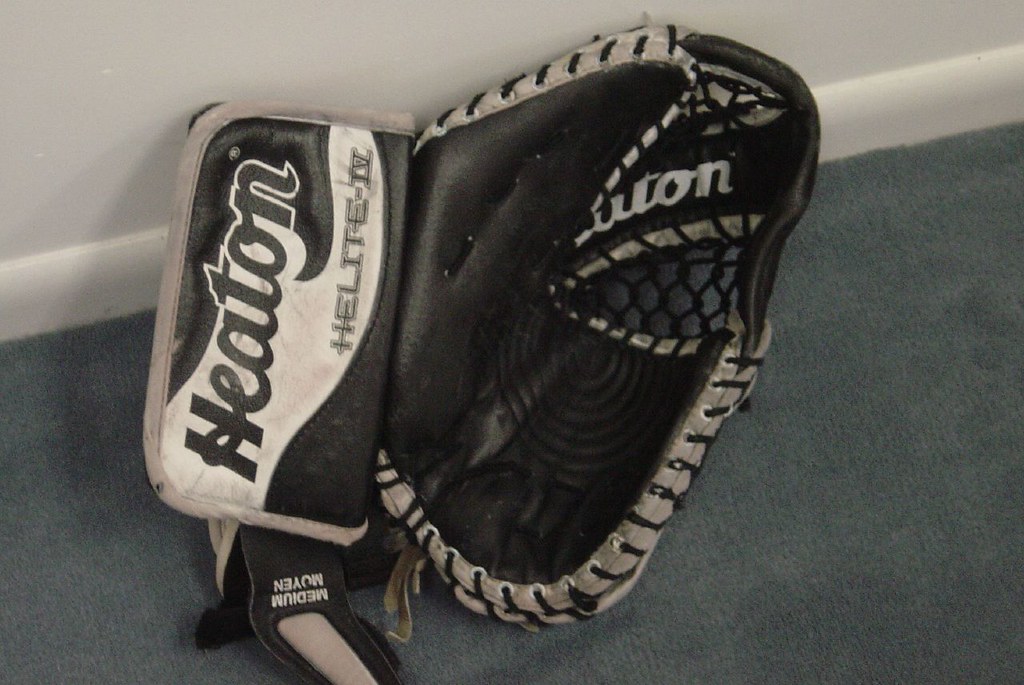
Worn on the opposite hand, it helps collect up the puck on the ice or catch a flying shot.
A goalie may freeze play and force a faceoff by holding or trapping the puck in the catching glove. They can also do a “catch and release” by catching and then releasing the puck behind the net or onto their stick to play it.
League rules restrict catches in the width of the wrist padding and the overall edge of the glove.
Blocker
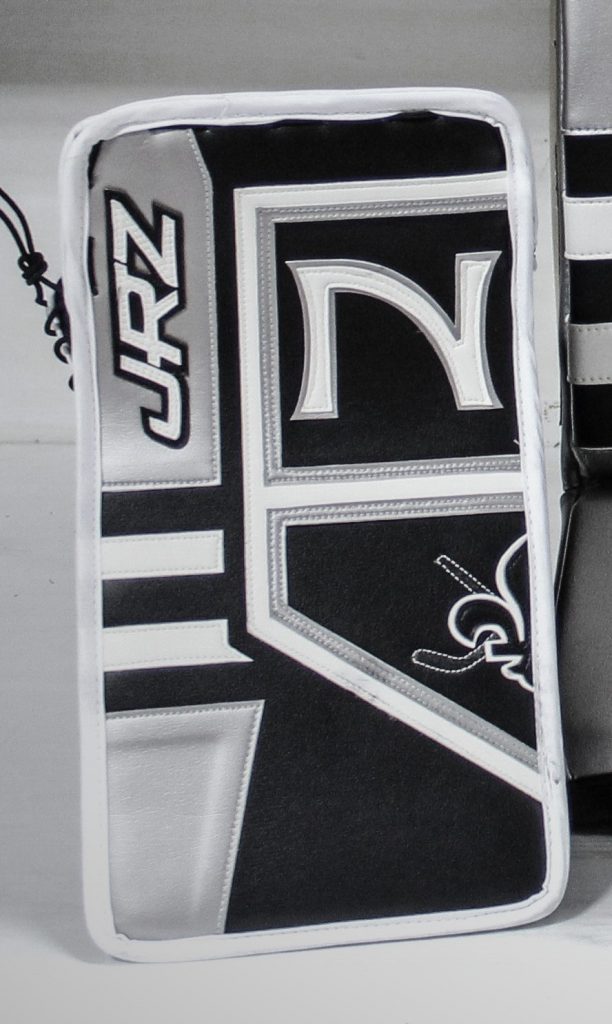
Worn on the hand that holds the stick, it is a glove with a rectangular pad on the back, used to deflect shots.
Innovations include a curved portion to redirect blocked pucks outward instead of up or back. And a specially molded front part to allow ‘paddle down’ saves where the stick is laid horizontally on the ice surface.
Blockers are usually limited in overall surface area by league rules.
Goal jock
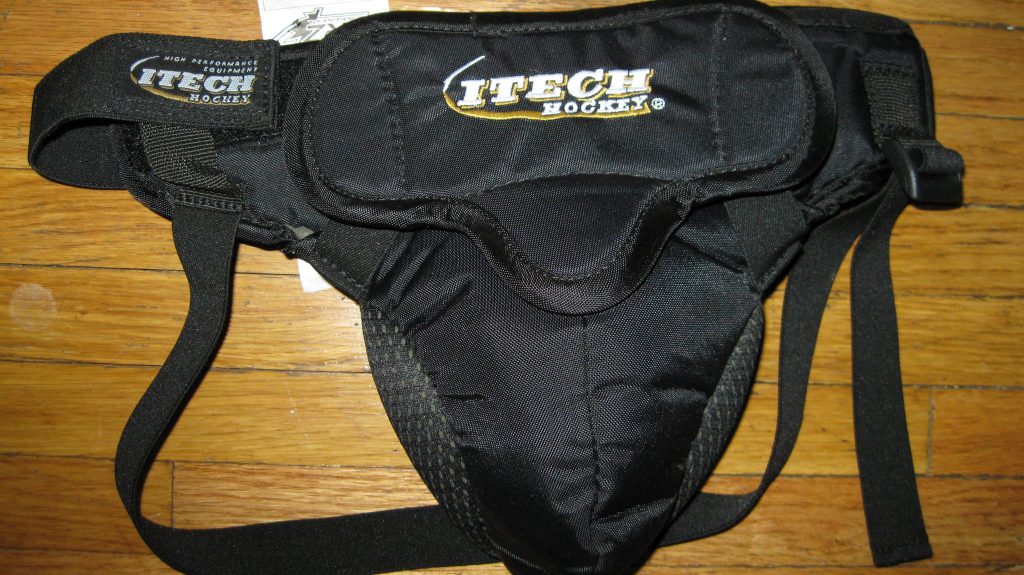
Better pelvic protection and more stuffing in front of the cup than a player’s jock provide a lower abdomen shield and a more extensive or more robust cup.
Goal pants
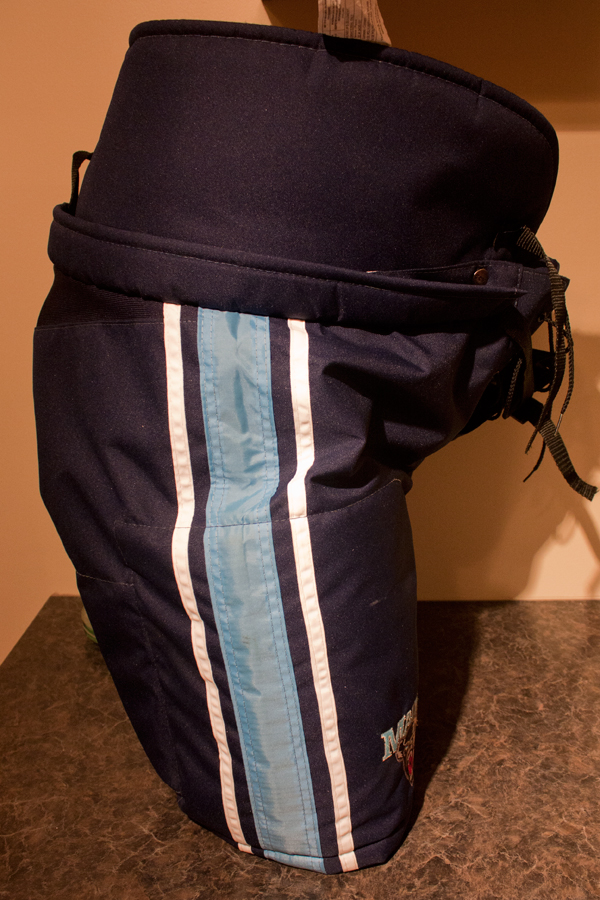
Combining thicker thigh padding and extra pelvic/hip protection but reduced groin protection. This is moderated by the jock and allows for increased flexibility.
Goal pads
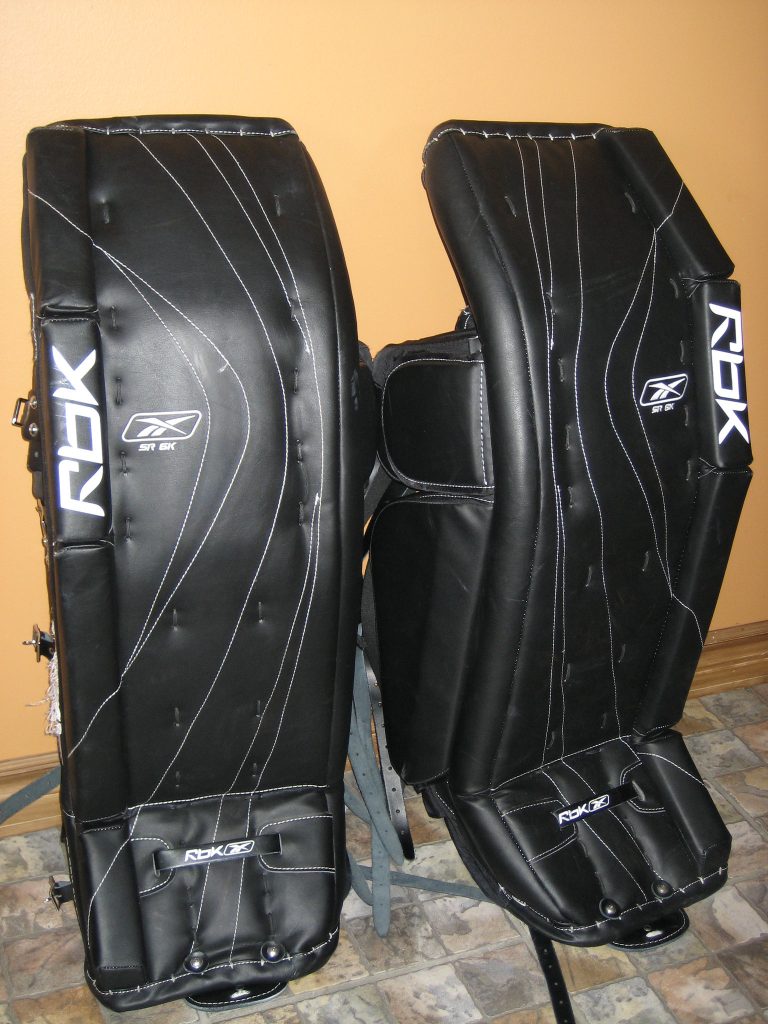
Perhaps the most noticeable part of a goalie’s equipment, goalie “legs” are thickly padded, flat-faced leg pads.
It covers the top of the skate, the player’s shin, and the knees. It has extra padding on the inside of the leg and knee to protect the knee joint when dropping into a “butterfly”.
Pads are 11 or 12 in (279 or 305 mm) wide (recent NHL rule changes decreased the width of the pads) and sized to fit a player’s legs. Most shots are prevented by some method of “pad stop”.
Socks
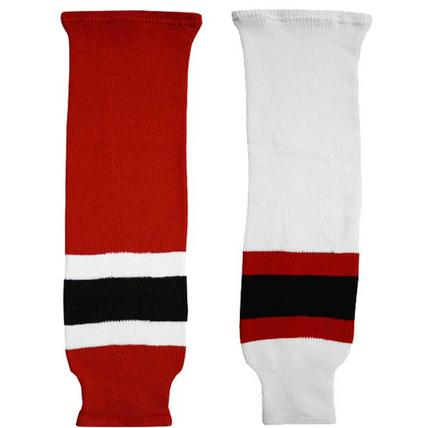
Covers the leg from the foot to merely above the knee or above. Usually, this is the only protection provided to a goalie’s calves, as the back of the cheaper model goalie pads is simply a series of straps. Expensive goalie pads do offer flexible flaps created to protect the calf.
Usually, the stick is carried in the right hand with the blocker, and the catching glove is on the left. But “full right” goalies shift this, holding a right-hand curve stick in the left hand and catching with the right.
This is mostly personal preference, often depending on which hand the goalie is most comfortable catching with.
The stick blade may be flat or curved to assist in playing the puck, depending on personal preference and stick handling style. A flat blade is usually better for stopping the puck, while a more curved blade allows for easier “lifting” of shots of the blade to the forwards/center.
The stick blade’s shaft may be slightly curved to support in picking it up off the ice when dropped.
Lacrosse
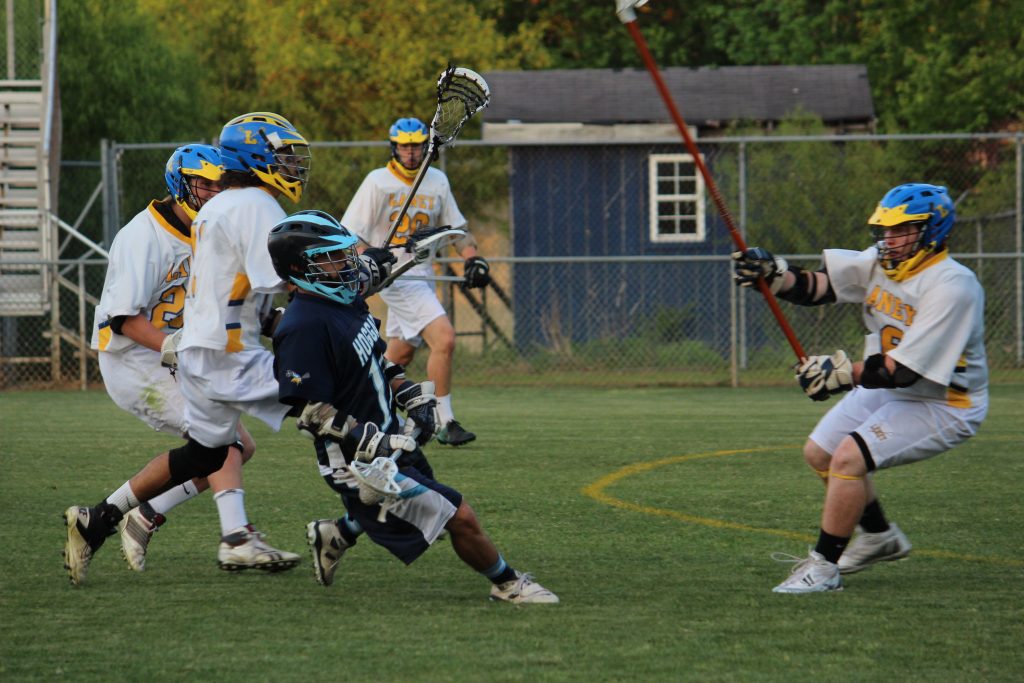
As goalies, we want to be as protected as possible without restricting our movement. Luckily for us, lacrosse goalie gear has made huge strides in just the last ten years.
With the growing popularity of the sport, many lacrosse companies have invested heavily in research and improvement to create new lacrosse gear that’s lighter and safer than its predecessors.
If you’re a brand new lacrosse goalie or a parent wondering what gear your child will need to play goalie, here are some essentials:
Helmet
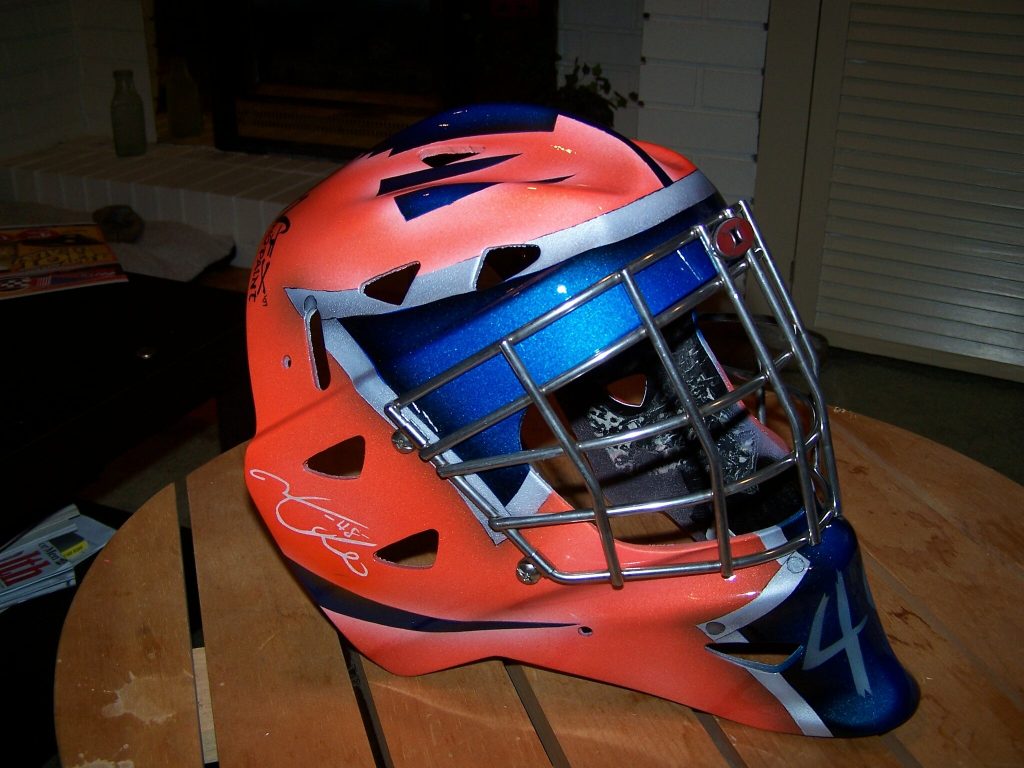
The helmets available in the market nowadays are extremely light and yet offer more protection and style than helmets of the past. Goalies will get hit in the head with the ball, so it’s essential to use a newer style helmet to avoid concussions.
There is no difference between a goalie helmet and the helmets used by attackman, defenseman, and middies. The only small difference is we add a throat guard to the goalie helmet.
There is also no difference between the helmets used by male and female goalies. Just ensure you always get the right size.
If you play for a school team, they may provide the headgear. But if you’re playing for a club or traveling team, you’re often on your own.
Mouth Guard
The mouthpiece is a critical piece of equipment in lacrosse, and everyone, including the goalies, must wear one.
Since goalies are regularly talking to communicate to the defense, many don’t like to use mouth guards.
But they are essential to reduce injuries from a laser shot to the head or get hit while outside the crease. They’re also necessary, according to the rulebook.
Throat Guard
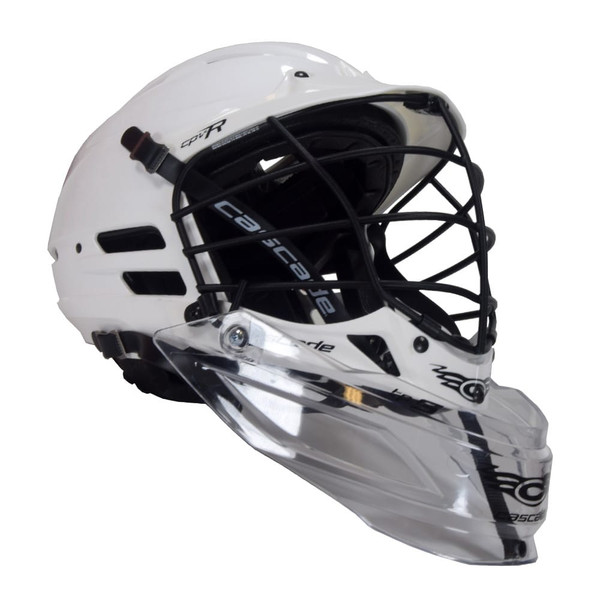
The throat guard connects to your helmet via screws and protects your throat from shots.
When you have this equipment on, always check that it fully covers your throat area, as getting it in this part could cause serious injury.
Chest Protector
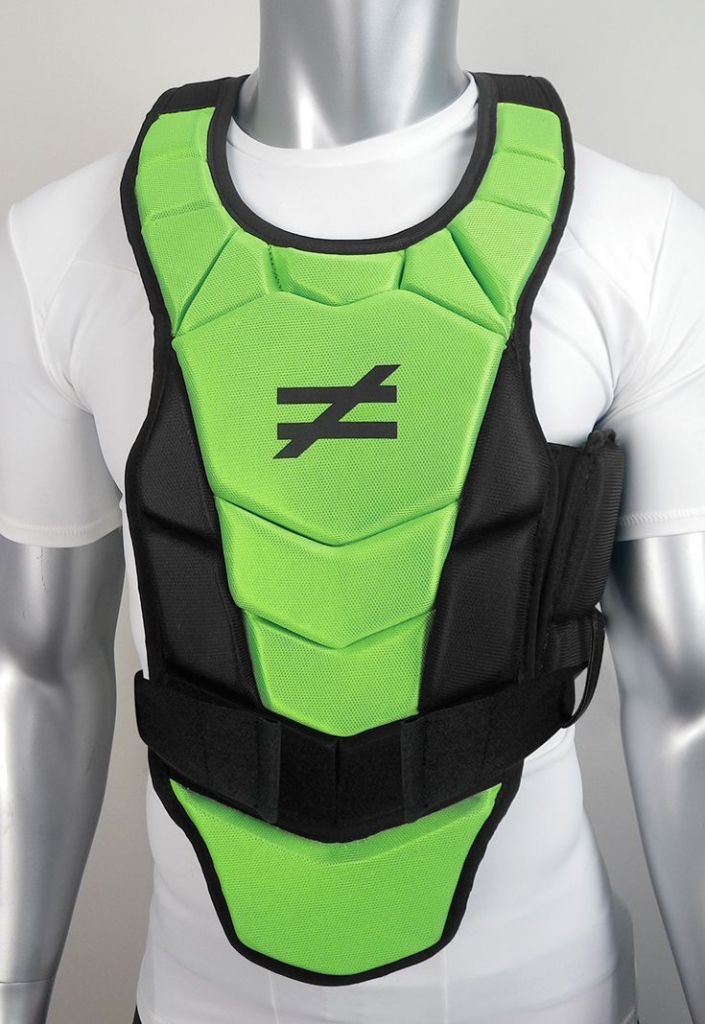
The chest protector is going to shield your chest, heart, stomach, and shoulder area.
Like the helmet, we’re going to be catching shots off of the chest protector, so you must buy the best protector you can afford.
Modern chest protectors come with bolstered chest plates to protect your heart in the event you take a shot to that region.
Groin Supporter
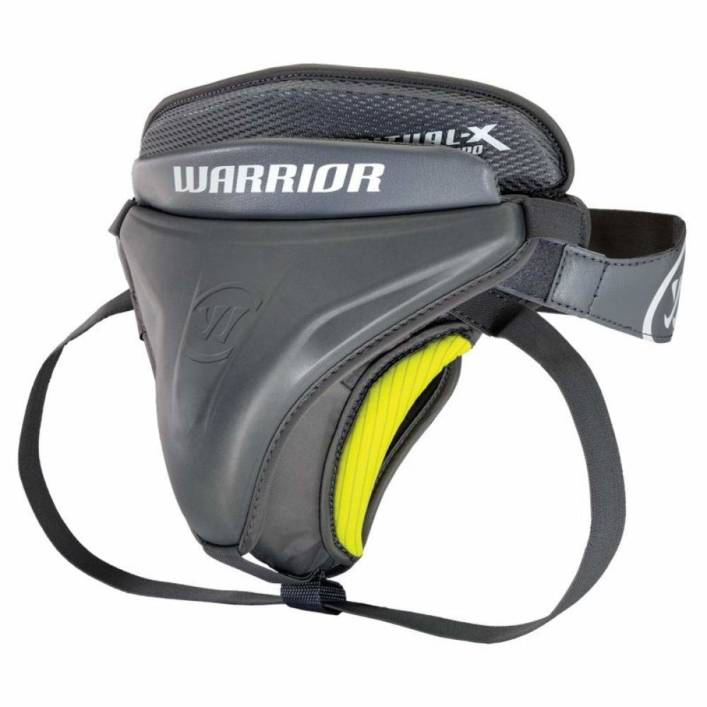
This jock provides the most protection and is worth the investment.
This type of athletic cup offers some extra hip padding in addition to protecting your entire groinal zone.
This piece of equipment is more essential for us than female goalies. Female goalies might feel adequately protected in this area with the lacrosse goalie pants.
Goalie Pants
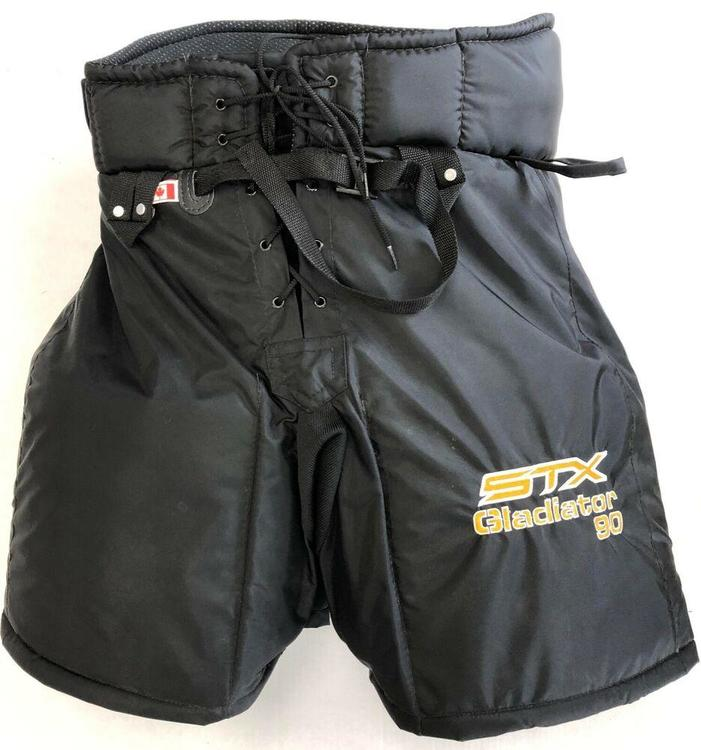
These pants are going to guard your thighs and hips. Most importantly, they’re going to reinforce the sensation of being protected.
This can help instill confidence in our young goalkeepers.
Like shin protection, for women goalies at the high school level and below, thigh protection is also needed. Just ensure it doesn’t significantly increase your legs (i.e., no field hockey pads) to remain legal.
If you decide to use goalie pants, be sure to select a pair that doesn’t restrict your range of motion.
Shin Guards
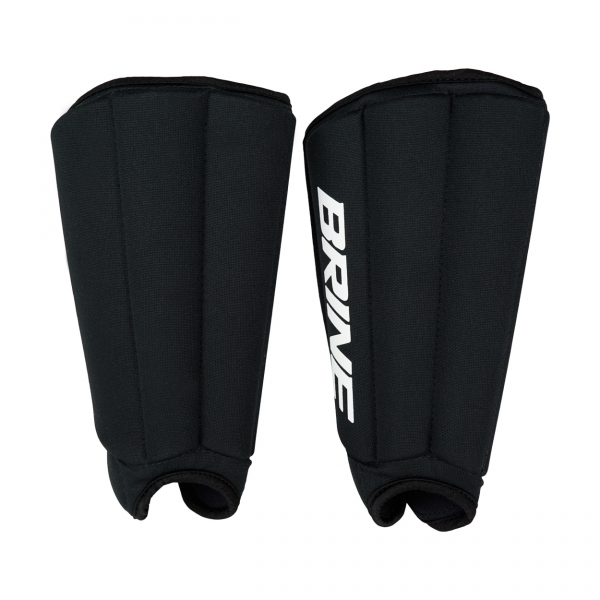
There’s no way to sugarcoat this. Getting hit in the shins with a lacrosse ball sucks! It can knock the wind out of a young goalie’s sails and destroy the entire practice.
Some goalies claim shin guards slow them down, but that’s why it is recommended to use a super light pair that doesn’t restrict the ankle or knee movement.
Cleats
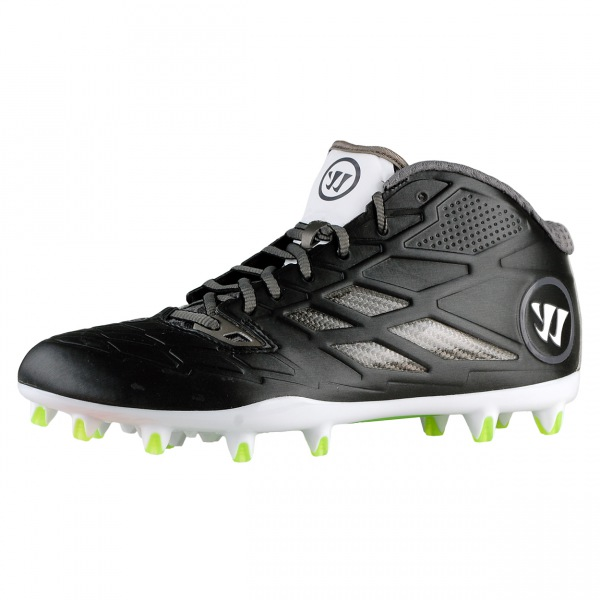
Unlike the other equipment, they’re not going to impact your game significantly, so any pair of cleats will do. Getting a pair of high tops will give you added ankle and foot protection if a ball strikes this area.
Goalie Gloves
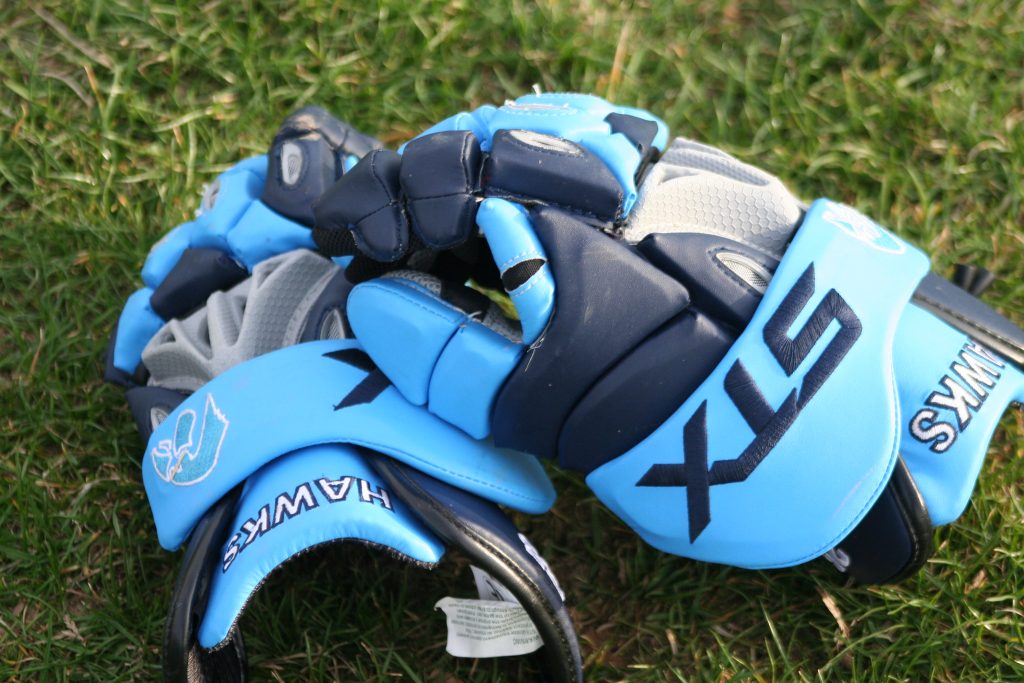
You must purchase lacrosse goalie gloves instead of just a regular pair of lacrosse gloves.
The goalie gloves have extra padding and a reinforced thumb to help protect our hands and avoid any injuries.
Lacrosse Goalie Stick
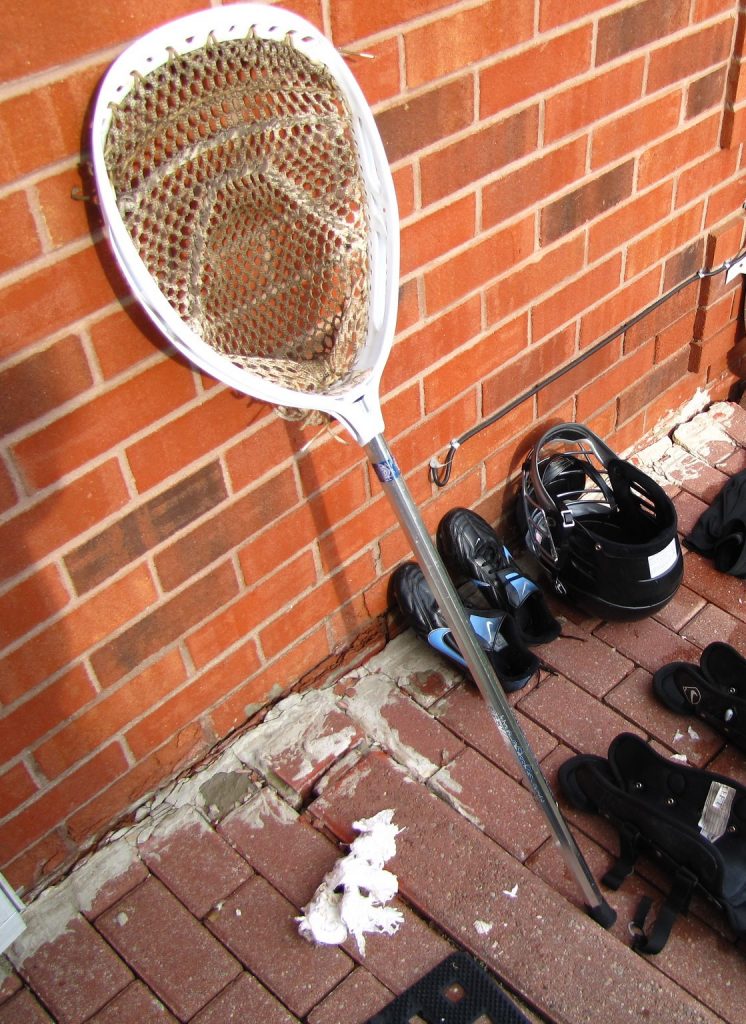
Your lacrosse goalie stick, aka your wand, aka your save maker, aka the most significant piece of equipment when it comes to your ability to make saves.
I split the stick up into three different sections – the head, the mesh, and the shaft. Complete goalie sticks will come all three together as a package, or you can pick and choose various ones to create a perfect goalie stick.
There are thousands of several heads, mesh, and shaft combinations that you can use to create your goalie stick. Just look at all the varieties used by today’s MLL goalies, NCAA Men’s Goalies, and NCAA Women’s Goalies.
Watching an opposing team charge down the field with the ball, preparing to launch shot after the shot, can be intimidating. But as a goalie, you need to be able to keep your cool and make the big saves to keep your team on top.
To do so, you need to come to the field prepared with the right gear. There are equipment and apparel designed specifically to help improve your game from your head to your feet and keep you protected.
Migrated from the original Goalies Club football site. Expert review pending under our editorial policy. Spotted an error? Tell us.